


In aviation, a crisis rarely appears as a single event. It usually takes shape from a chain of risks, changes, and accumulated pressure, then quickly affects safety, people, assets, operations, and the ability to sustain the business.
Crisis management capability therefore does not lie only in reacting once an incident has occurred. What matters more is recognizing risk early enough, assessing its severity correctly, building response plans, organizing exercises, and maintaining the ability to recover when a situation moves beyond normal operations.
The Advanced Crisis Management program (Advanced Crisis Management - ACM) is designed to strengthen the ability to identify, assess, respond to, and coordinate in complex crisis scenarios, especially for leaders and safety managers.
Program information
- Duration: 2 days
- Format: In person, classroom-based
- Target audience: Safety managers
- Participation requirement: Prior training in basic risk management
- Instructor: Geraint Bermingham
- Class size: 30 participants
- Delivered for: Vietnam Airlines
When risk moves beyond control and becomes a crisis
Aviation is an industry particularly sensitive to changes in the operating environment. Pandemics, natural disasters, conflict, economic volatility, technology, data, passengers, or internal incidents can all become sources of crisis.
The challenge for the organization does not lie in “whether risk exists or not,” but in:
- Which risks have the potential to develop into a crisis?
- How does the organization assess the level of severity?
- Who makes the decision?
- Which plan is activated?
- And how quickly can the organization recover after a situation occurs?

In many organizations:
- New threats emerge quickly and are difficult to control
- Lack of flexible response capability in real situations
- Coordination Between Departments Remains Limited
- The response plan has not been validated through exercises.
This can reduce response effectiveness when a crisis occurs.
Program objective: From risk identification to practical response capability
The program aims to help management teams strengthen crisis management capability through a systematic approach.
Participants are equipped to:
- Understand the principles of crisis management
- Identify new threats
- Analyze lessons from actual incidents
- Develop and implement a response plan.
From implementation experience at Vietnam Airlines, the program also helps participants learn how to assess the level of risk, determine the possibility that a risk may turn into a crisis, and build a response plan suited to each situation.
Content of the Advanced Crisis Management Program
Crisis management principles
Participants are introduced to the core principles of crisis management, creating a foundation for analysis and for developing response options.
The focus is not only on reacting when a crisis occurs, but also on preparing in advance so the organization can act quickly, cleanly, and accurately when a situation appears.
Identify new threats
Threats in aviation are increasingly diverse: natural disasters, epidemics, technology, data, finance, passengers, conflict, and hard-to-predict fluctuations in the operating environment.
The program therefore focuses on the ability to recognize threats that may develop into a crisis, rather than only handling incidents that are already known in advance.
Assess the level of risk and the potential for it to become a crisis
One of the most important points is the distinction:Which risks need only be controlled within the existing system, and which have reached the point of activating crisis management mechanisms?
Participants are introduced to ways of assessing each situation at different levels, and from that consider whether a risk is likely to become a crisis and what response options need to be prepared.
Crisis management planning
The program covers:
- Guidance on Crisis Management Planning
- Developing a response handbook
- Prepare practical solutions
- Determine how the organization will implement the plan when a situation occurs.
This is the shift from awareness to organizational readiness.
Error Analysis and Lessons from Actual Incidents
Scenarios and typical examples are used to help participants look back at how a crisis forms, the decisions that were made, and the lessons the organization can draw.
This is especially important in aviation, where a small incident can quickly create a cascading effect if it is not identified and controlled in time.
Strategy for Ensuring Safety and Integrating Technology
The program also addresses safety assurance strategy and the integration of technology in crisis management, helping the organization build a response capability suited to the modern operating environment.
From a plan on paper to response capability in practice
A crisis management plan has real value only when the organization can implement it under high pressure. The program therefore does not stop at building the plan, but also places the emphasis on:
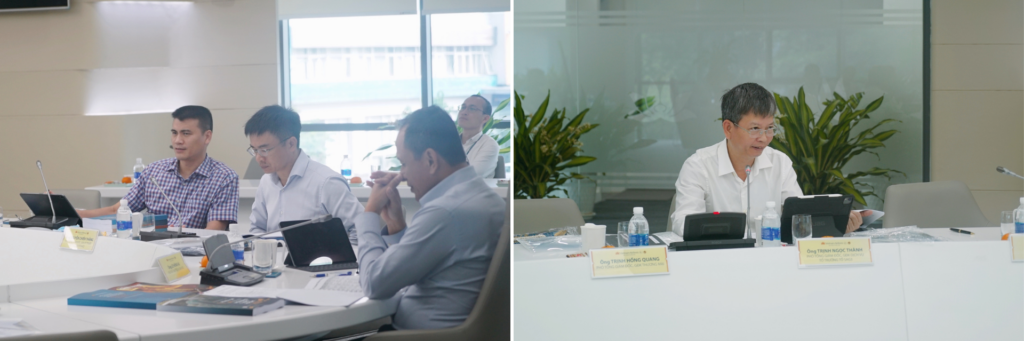
- Group practice
- Large-Scale Crisis Scenario Simulation
- Discuss exercise scenarios
- Verify the coordination and response capability of stakeholders.
The objective is to help participants practice their response capability in an environment close to reality, where time, information, and resources are always variables that must be weighed together.
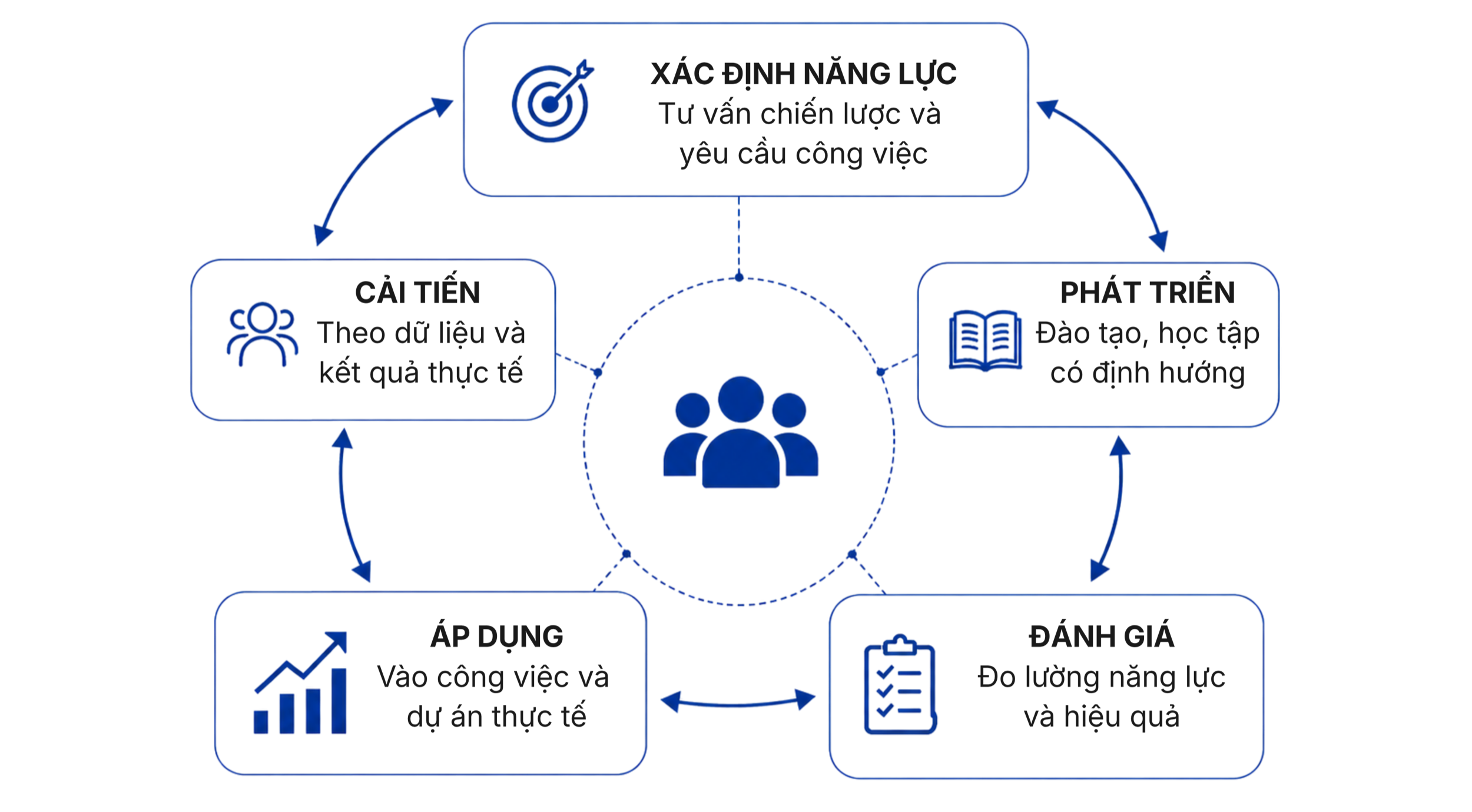
Four steps of a sustainable crisis-response capability
Mitigation:Identify and control factors that may increase the likelihood of a crisis.
Preparedness: Prepare the plan, resources, roles, and scenarios before the situation occurs.
Response: Organize a quick, clean, and accurate response once a crisis has formed.
Recovery: Restore operations and minimize lasting impact on the organization.
These 4 steps help crisis management be seen not as an immediate reaction, but as a capability running throughout before - during - after a crisis.
Connect crisis management with business continuity
A crisis does not affect safety alone. It can directly affect revenue, profit, technology, people, assets, and the organization's ability to sustain operations.
The program therefore also places crisis management in relation to business continuity planning, helping the organization prepare for force majeure situations and reduce the impact of negative events. This enables participants to view a crisis from the perspective of overall governance, rather than limiting it to incident handling.
Value gained after the program
After the program, participants will be able to:
- Identify and Assess Crisis Scenarios
- Developing a suitable response plan
- Enhance Coordination and Decision-Making
- Apply to exercises and actual operations.
More importantly, the program helps the management team form a systematic view:a crisis does not begin when an incident breaks out; it begins with how the organization identified risk, prepared, and decided beforehand.
Which units is the program suitable for?
The program is suitable for:
- Organizations with High Requirements for Crisis Management
- Mid- to Senior-Level Management and Safety Teams
- Organizations need to strengthen practical response capability.
In particular, the program suits organizations that need to move from the state of “having a response plan” to the state of “having the capability to activate and implement the plan under real conditions”.
Crisis management needs to be prepared and validated before it occurs
A crisis does not give an organization much time to learn how to respond once it has begun. Real capability lies in how far, before the situation occurs, the organization has assessed risk, built scenarios, assigned roles, rehearsed, and prepared its ability to recover.
Hung Viet helps organizations assess current response capability, build suitable scenarios and plans, and design realistic exercise programs. Through this, crisis management is moved from a planning document into an operational capability that can be tested before the organization actually has to face a crisis.