


Building a crisis management plan and a crisis-handling procedure is an indispensable part of every business's development and operating strategy. A crisis can happen to any organization.

A crisis can arise from many different causes, internal as well as external, including unintended incidents involving partners, customers, and competitors. These can seriously affect the company's image and reputation.
When an enterprise is in crisis, that means possible damage to both brand and finances, leading to stagnation in production and business, in projects under way, or in contracts already signed and being signed.
Readiness and an effective, rapid crisis management plan are therefore critically important and need to be established early as a process.
What is an enterprise crisis?
Every business and corporate group, however large or long-established, is at risk of being affected by crises. The most important reason for managing crises is to prepare for every situation that may arise.
69% of leaders experienced at least 1 corporate crisis in the period from 2014 - 2019, while the average number was 3 crises.
A corporate crisis can occur in one or many areas of the business, such as a financial crisis, a human-resource crisis, a communications crisis, a business crisis, and others, threatening a company’s development, success, and prosperity, tarnishing its reputation, and causing harm to partners, customers, or even the company’s own employees.
What are crisis governance and crisis management? Common types of crises
With a plan and process carefully prepared in advance, you can reduce the impact of the crisis on the company's people and business operations, and rebuild the trust of customers and partners.
The following are some common types of crises that enterprises often face:
Sudden crises
This is a type of crisis that occurs suddenly and lies beyond the control of society and the company. It originates from natural disasters, floods, epidemics, political instability, war,event"Black Swan", ... If it is not resolved quickly, the impact on the enterprise's business and production operations will be very serious, even paralysis or bankruptcy.
Slow-burn crises
It is a form of crisis in which warning signs have already appeared. At first it is not serious, but it can grow more severe over time. Although managers may be able to foresee the crisis, it remains difficult to find the best measures to handle and remedy it.
Latent crisis
This type of crisis is easy to foresee because of many specific signals. Those signals, however, tend to appear only in a scattered way and attached to minor events, so they are often overlooked. As a result, a timely decision to prevent the crisis cannot be made.
Crisis governance and management processes
Before the crisis
Preventing the worst situations that can occur is the essential first step. Before a problem arises, companies should propose plans and management options, establish a crisis-response team, and rehearse simulated scenarios in order to test how successful the plans are.
During the crisis
A press conference must be organized andpress releasethrough media channels, in order to respond, rebut, and restate the company's official position, so as to reassure partners, customers, shareholders, the leadership, employees, public opinion, and the general public.
Silence is also a solution; however, concrete action is always more practical than sitting and waiting"headwinds"pass, or wait for another crisis to strike another company and hope that public opinion will forget them.
After the crisis
Khi "storm cleared", the company needs to update the situation and respond to related questions about the enterprise’s current state. Finally, the whole process of governance and crisis management is reviewed, together with the difficulties the enterprise has encountered; ways of handling problems are supplemented and revised, and lessons are drawn.
Why should you develop a crisis governance and management plan?
The reason companies and businesses need crisis management plans is to cope with adverse events that may occur. The benefits of a good crisis management plan include:
- Maintain the company's reputation and brand with customers, hold market share against competitors, and protect the interests of stakeholders and investors.
- Protect the enterprise's internal constituents when a disaster occurs.
- Helps the organization stay prepared to face the worst crises.
- Maintain stable business operations even in times of crisis, with stability in personnel and finances.

6 steps to establish an enterprise crisis management plan process
To develop options for dealing with the worst situations that may occur, managers can refer to the 6 crisis-resolution planning steps below:
A working group must be established and assigned responsibility for managing the crisis management plan.
Together, discuss and assess the different risks the company may face for each type of crisis that could occur.
Determine the business impact of the risks that have been identified. Each risk can cause different impacts, so they must be analyzed fully and separately. Potential business impacts may include loss of customers, damage to reputation, stalled sales, reduced revenue, or penalties under the law.
Identify the actions your team will need to take to respond to the identified threat if it occurs.
Detail the plan with specific checklists, contact points, deadlines, timelines, and methods, …
Review the completed plan for any remaining gaps, and update it at least 1 time per year, because latent risks can change.
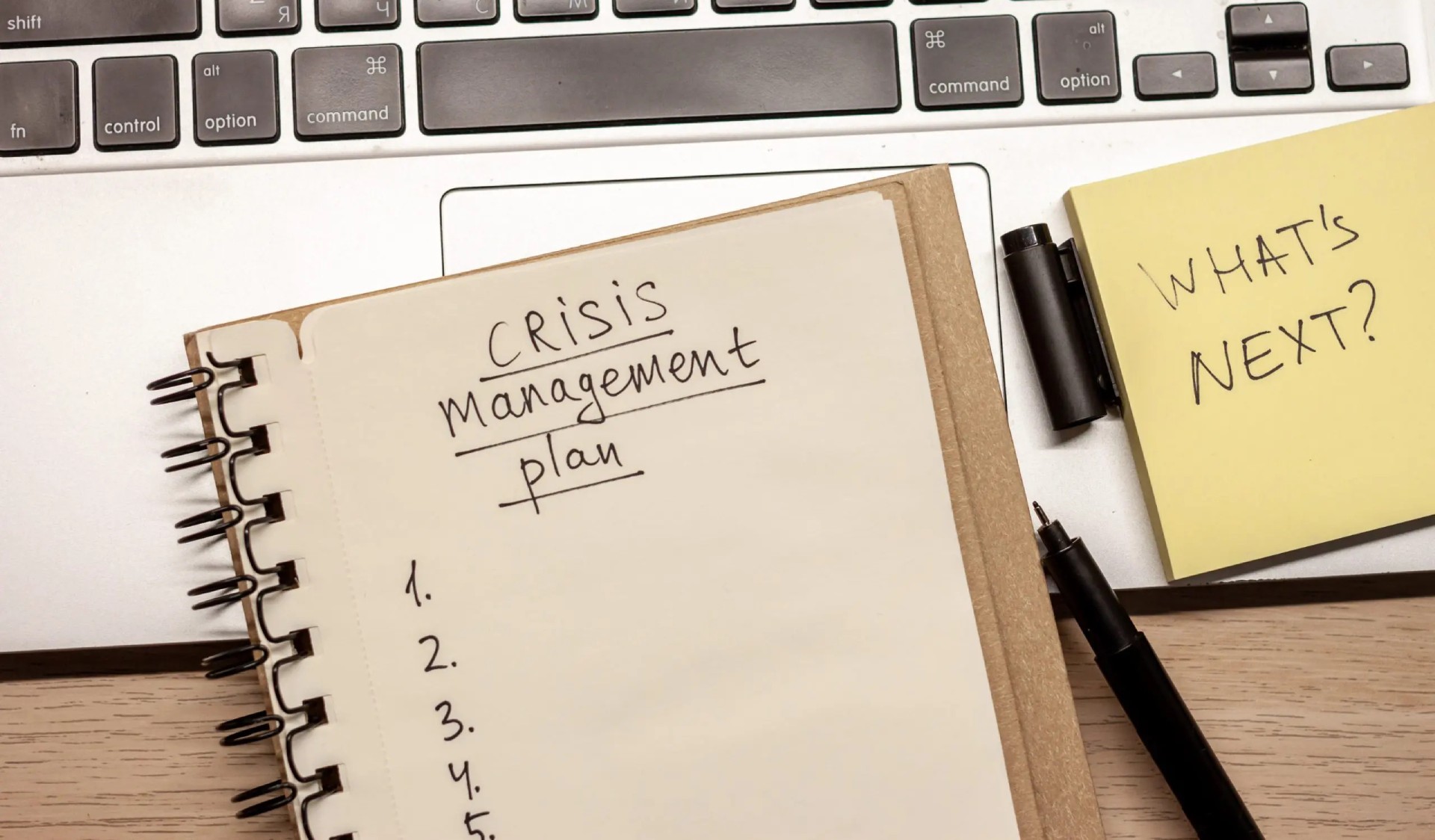
A specific enterprise crisis management plan checklist
List and outline possible risks in order of probability of occurrence.
Determine the timing or level of impact that will trigger the plan's sequence of actions.
Emergency contact list for external assistance and consultants.
Outline an action plan for each person on the responsible team. A RACI matrix can be used to clarify positions, communication, and responsibilities.
If a crisis has an external impact, the situation needs to be explained to key external stakeholders and the public in terms of how they are affected, together with the solution and a contact point for handling feedback.
Summarize and discuss what went well and what did not, in order to draw lessons, update, and improve the plan for next time.
What does the crisis governance and management team need?
The personnel selected for the crisis management team need the ability to adapt with flexibility and strong communication skills. The ability to anticipate many situations that may arise is necessary, as is analyzing the advantages and disadvantages of each decision that can set off a chain of consequences.
- Respond skillfully to the media, ensuring consistency across statements, press releases, and social media posts.
- Resolve the problem as early as possible before the crisis spreads.
- Choose an experienced spokesperson with the ability and know-how to handle and steer public opinion. The spokesperson needs fluent expression and a calm manner when engaging with the media.
- Thoroughly approve every post, announcement, and message before it is published or sent to clients and partners.
- Ensuring the safety of investors and shareholders is the top priority.
- Know how to learn from the crises of other companies and adapt those lessons to the current situation.
The above is the information thatHung Viet Consultingbelieve it is useful for corporate governance and business crisis management. It is hoped that this article can help organizations and companies build a sound crisis management plan and a capable crisis management team, so as to avoid damage to their reputation and business operations.