

The pilot profession is often cited as one of the jobs with the strictest requirements for professional expertise, a sense of responsibility, and practical experience. Trainees must also complete training that is long in duration and considerable in cost.
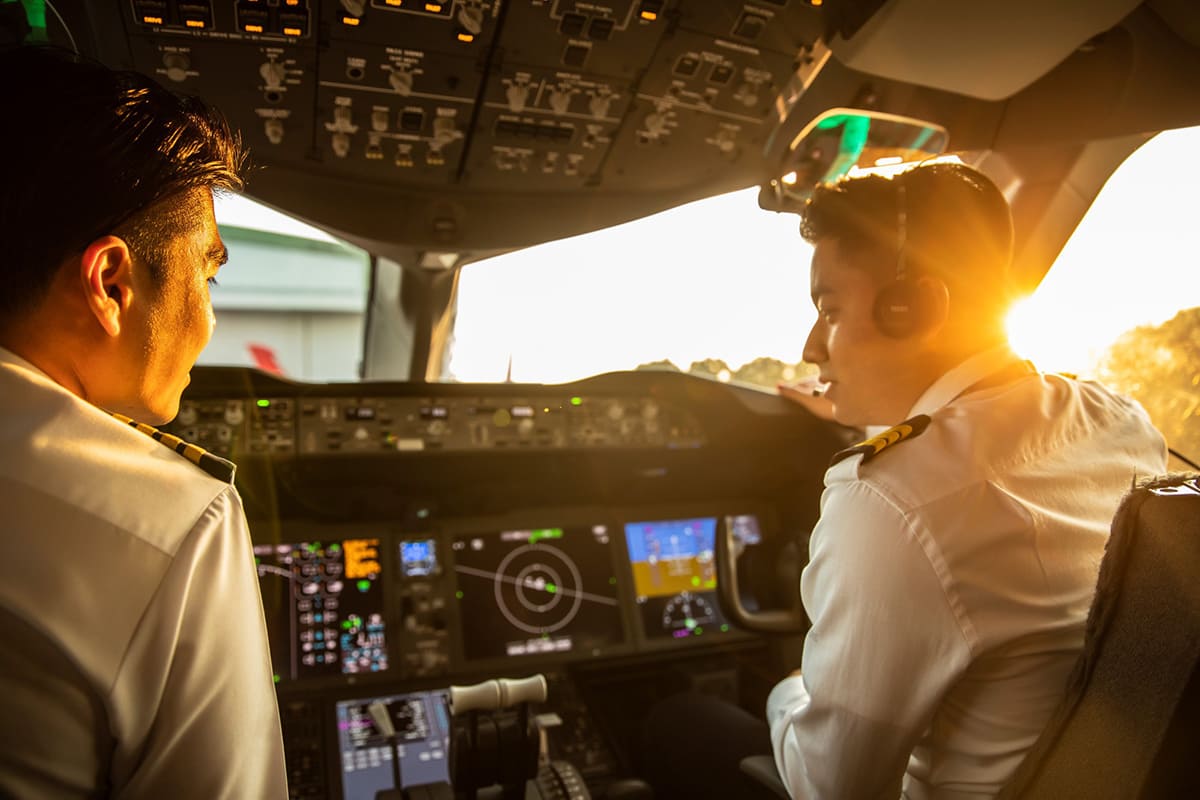
Yet every difficult journey brings glory when it is conquered; the career of a pilot offers good income and strong opportunities for advancement, and is worth the sacrifice and the effort.
Being a pilot is not simply the work of controlling an aircraft. It also carries the responsibility and the mission of assuring the safety of hundreds of passengers and of cargo in the air. Every flight is a journey full of challenges, demanding absolute concentration and the ability to read and handle situations quickly, so as to assure the best experience for customers, the safety of life and property, and the airline’s reputation, trust, and brand.
The pilot profession always has high recruitment demand, together with attractive compensation, so stringent standards of health, skill, and professional experience are always highly regarded.
The state of the pilot profession in Vietnam
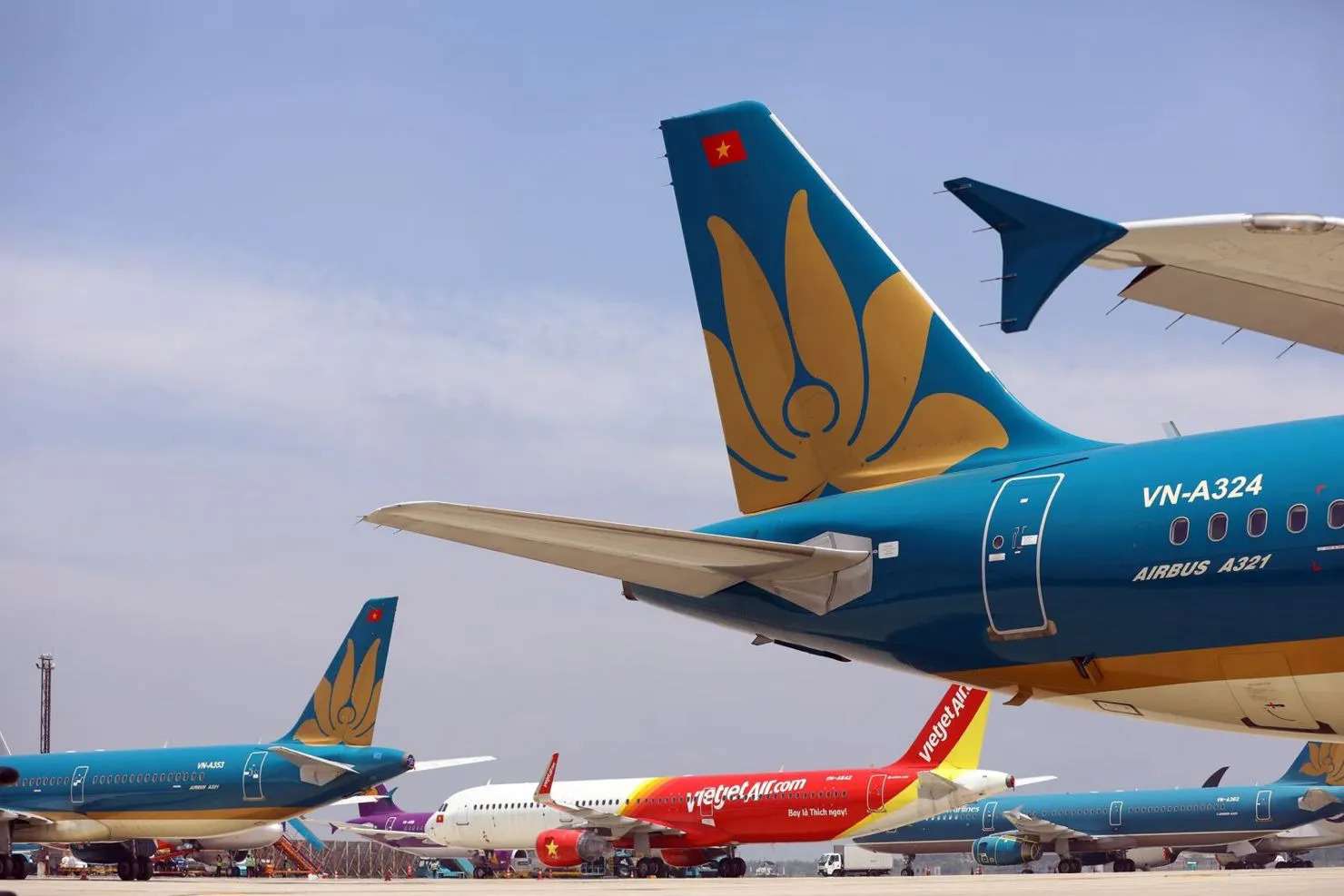
According to statistics fromCivil Aviation Authority, in 2023 the number of civil aircraft increased from 222 to more than 360. According to estimates byBoeing(the world's largest aircraft manufacturer, of the United States); to operate at full capacity, each aircraft will require up to 20 pilots.
That means Vietnam's aviation industry will need about 2700 pilots to operate this entire fleet of new aircraft. In practice, the pilot profession ranks among the occupations with the most severe shortages of personnel.
Main duties, the role of a pilot
A pilot is the person who controls aircraft, from small private planes to large commercial passenger aircraft, or cargo, military, or civil aircraft. Their principal work is to operate flights according to the route and the flight plan that have been approved.
This article addresses only civil pilots working for airlines and air transport operators.
During flight, the pilot is responsible for navigating the aircraft, maintaining communication with air traffic control, ensuring the safety of passengers and cargo, and carrying out other assigned duties.
Alongside aircraft handling skills, pilots need a firm command of international aviation regulations and the flight safety system, and the ability to handle emergencies such as bad weather, technical failures, terrorism, or sudden changes en route.
Captains must also direct the cabin crew and the flight crew. They report the progress of the flight to air traffic control. They write the report and the flight log after each flight ends.

Requirements to become a pilot
Becoming a true pilot requires a long and rigorous process of training that demands great effort as well as investment. Below are some basic standards:
- Age:from18years of age until35years old.
- Health:Applicants submitting a selection application (Cadet) must hold a Class 1 medical certificate (according toICAO - International Civil Aviation Organization). The certifications include examinations of vision, hearing, the cardiovascular system, circulation, and general health factors, as well as infectious diseases. Maintaining good health is a prerequisite for performing work in the air.
Male applicants must have a height of at least1m65, weighing from54 kg. Female candidates must have a height of at least1m60, weighing from48 kgor above.Body mass index (BMI)must be within the range from18to30, together with tests of chest circumference, grip strength, torso pull strength, and blood pressure. A balanced physique, with no physical defects, no scars, and no tattoos visible on the outside.
- Knowledge:Candidates need knowledge of mathematics and physics in order to understand the principles of flight, aircraft control systems, and how to handle complex technical systems. This is why pilot training programs usually include in-depth courses in physics and engineering.
- Foreign language:is also an additional requirement, needed in order to access foreign instructional materials. In summary, candidates must have graduated from high school, hold a valid TOEIC score of 550 (IELTS 5.5) or above, or an equivalent. They must communicate well: assertive, confident, and fluent, with no lisp and no stutter.
- Background:A clear personal and family background, with no criminal convictions or prior offenses (as confirmed by a judicial record certificate).
- Certificate:To obtain a pilot license, a pilot must complete training at a reputable aviation training organization. The most common certificate isCPL - Commercial Pilot License hay "commercial pilot license", permitting the operation of commercial aircraft. This training includes theory and flight practice, helping pilots become familiar with every flight procedure from preparation for takeoff through to a safe landing.
In addition, every 6 months to 1 year, pilots must re-sit the mandatory basic subjects. If they fail even 1 of the required items, the license will be suspended or, more severely, the certificate will be temporarily locked for 5 consecutive years.
Command of English is something a pilot must study and practice every day, because this working environment depends heavily on communication in English. It would be truly damaging if you could not communicate with air traffic control at a foreign airport in order to land or take off. To become a captain (pilot in command), pilots must serve as first officers for about 1 year. Only after thousands of flight hours, together with 5 years of accumulated experience, can they take the controls as pilot in command.
Training process
The pathway for training a professional pilot lasts many months or even many years, depending on each candidate's ability and the requirements of each country. This process can be divided into three main stages:
- Theoretical phase:Students who meet the admission requirements will study principles of flight, aircraft control and systems, aerodynamics, meteorology, aviation law, and procedures for handling situations.
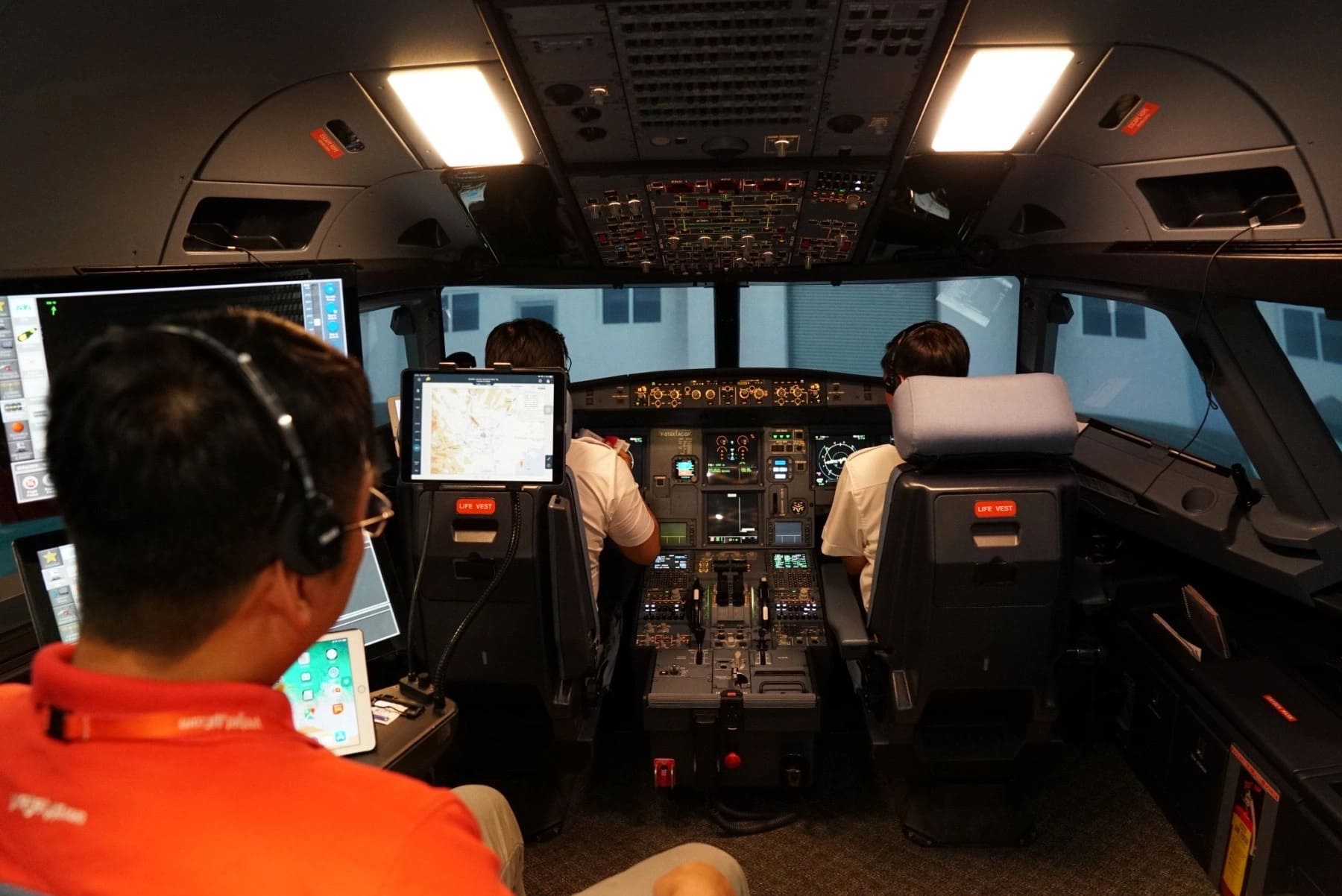
- Flight training:After completing the theory and the simulator flying, trainees receive practical flight training. Under the guidance of experienced instructors, trainees become familiar with pre-flight preparation, takeoff, landing, and flying maneuvers from the basic to the complex. Practical flying usually extends to hundreds of hours in real conditions.
- Advanced training:After completing the basic practical phase, trainees take advanced training courses so that they can fly commercial aircraft or large transport aircraft. In particular, pilots are trained in emergency handling, fuel management, and flight control in bad weather and in turbulence.
Career development opportunities
It is a difficult profession, with a long period of training and a high cost, yet the pilot profession continues to attract interest because its appeal never fades. Demand for people in the industry keeps rising worldwide, especially in countries whose aviation sectors are developed or developing strongly, where income per capita is rising and the territory is large, such as Vietnam, the United States, China, Russia, India, the countries of Europe, Latin America, ...
The rapid recovery of tourism has brought a marked upturn in commercial aviation afterthe COVID-19 pandemic, creating thousands of new job opportunities for pilots. In Vietnam, airlines such asVietnam Airlines, VietJet Air, Bamboo Airways, continuously recruiting, and even investing in establishing their own training facilities.
In addition, experienced pilots can also work in other fields such as cargo transport, private flight services, and leadership roles, or take part in programs that train future generations of pilots.
“Mastering the sky is the key to reaching many lands and many cultures in the fastest way. No young person can turn down this most compelling privilege. In addition, a pilot’s career path is very clear and professional.”- Captain Le Nhu Vu Tuan shared.
Compensation and benefits
One of the most attractive factors leading young people to choose piloting as the career they pursue is the very high income, together with attractive benefits.
It is not only about fulfilling the dream of flying high, traveling easily to many places in the world, and being held in high regard by society. Depending on experience and the airlines one has worked for, a pilot's salary can reach10,000 USDper month. InVietnam Airlines, the average income of a pilot is115,3million VND/month. For pilots with seniority, income can be significantly higher, along with opportunities to work abroad.
In terms of benefits, pilots always enjoy the highest level of welfare at airlines, with premium health insurance, paid leave, leisure travel, and complimentary travel and premium-class accommodation on international flights.
Challenges of the pilot profession
Every profession has difficulties of its own, in proportion to the prestige and income it brings. Although the pilot profession offers many opportunities, the challenges are also numerous.
- The first is prolonged fatigue and stress, especially on long intercontinental flights that can last more than 10 hours. Thin air at altitudes abovestratosphereeasily causes reduced alertness and difficulty concentrating.
- Health is greatly affected by exposure to high-intensity radiation in the stratosphere. In particular, at altitudes of thousands of meters, lower pressure causes the human body to expand, which can lead to bleeding or hemorrhage. That is why pilots are not permitted to have scars on the body.
- There is great pressure to assure absolute safety for hundreds of lives and for valuable cargo. The aircraft itself is also an important asset. Any mistake, however small, such as a change in the weather, the airflow, other airborne objects, or an unexpected technical failure, can also lead to serious consequences.
- The ability to arrange work flexibly and to adapt well to changes in time zone and body clock is something the pilot profession demands. Flight schedules change frequently, daily life is disrupted by constant time-zone shifts, and long periods away from family are things you must accept and grow used to.
Billions of variables can arise, and a pilot must have the ability and the nerves of steel to make quick, accurate decisions in every situation. On holidays, they have to push themselves to work while everyone else is enjoying time off with family and friends.
Want to train as a pilot? Which school should you apply to? Which exam block?
Civil pilots do not need to attend university. Instead, cadets need to take a training course (usually lasting 14 - 24 months) at training organizations that areCivil Aviation Authority of Vietnamapproval or training abroad. On average, airlines take about 2.5 years to complete the training process.
That means the exam resultsNational High School Exam, admission by subject-combination blocks A, B, C, D,… is something students do not need to concern themselves with. You only need to have graduated from high school, hold a TOEIC score of 550 (IELTS 5.5) or above, and meet the health standards mentioned in the previous section.
The usual tuition for basic training courses in Vietnam is1,7 - VND 1.8 billion. Of this, overseas training costs are the largest share, at approximately57.000 USD - 65.000 USD(provided studies proceed smoothly).
After completing the basic training program, trainees who want to become commercial airline pilots will continue with type-rating training, trainingBase and IOEat a cost of no less thanVND 1.5 billion/person at the airlines. Therefore"total damage"to become a civil aviation pilot is approximatelyVND 4 billion, already including tuition, travel, and room and board.
Compared with studying abroad from the outset, for example in the United States, the cost at private institutions is about50.000 USD/year (~VND 1.1 billion), and the total cost for 4 years will be200.000 USD (~ VND 4.6 billion).
Therefore, before deciding to pursue this career, students and parents should calculate carefully and plan their finances so they can meet the training costs.
Hung Viet partners with reputable pilot training organizations
Hung Viet Consultingalways striving to advance the mission of training a high-quality pilot workforce, we are a long-standing partner ofVietnam Airlines Flight Training Center - FTC, a partner organization affiliated with many reputable pilot schools for students' reference:
Vietnam Airlines Flight Training Center
(FTC Flight Training Center)
FTCis a member of Vietnam’s national airline. FTC is headquartered at 117 Hong Ha, Ward 2, Tan Binh, Ho Chi Minh City. FTC was established on 10/12/1998 with the mission of training personnel for flight operations and ground operations, including pilots, cabin crew, and air traffic services staff.
The Boeing 767, Boeing 777, Boeing 787, Airbus A320, A321, A350, ATR 72, and Fokker 70 all have flight simulators (SIM) that meet international training standards well.
Bay Viet Flight School
(Viet Flight Training)
Bay Vietis the largest supplier of pilots in Vietnam since 2008. The cost of study at Bay Viet is about VND 1.7 billion, over 18-20 months, including training abroad (travel and meals not included).
To become a Bay Viet trainee, in addition to meeting the basic requirements, a candidate must pass 3 further examination rounds (Round 1: English listening and reading skills; Round 2: a computer-based multiple-choice test assessing adaptability, qualities, flying aptitude & development potential in the profession; Round 3: a face-to-face interview in English).
Bamboo Airways
(Bamboo Airways)
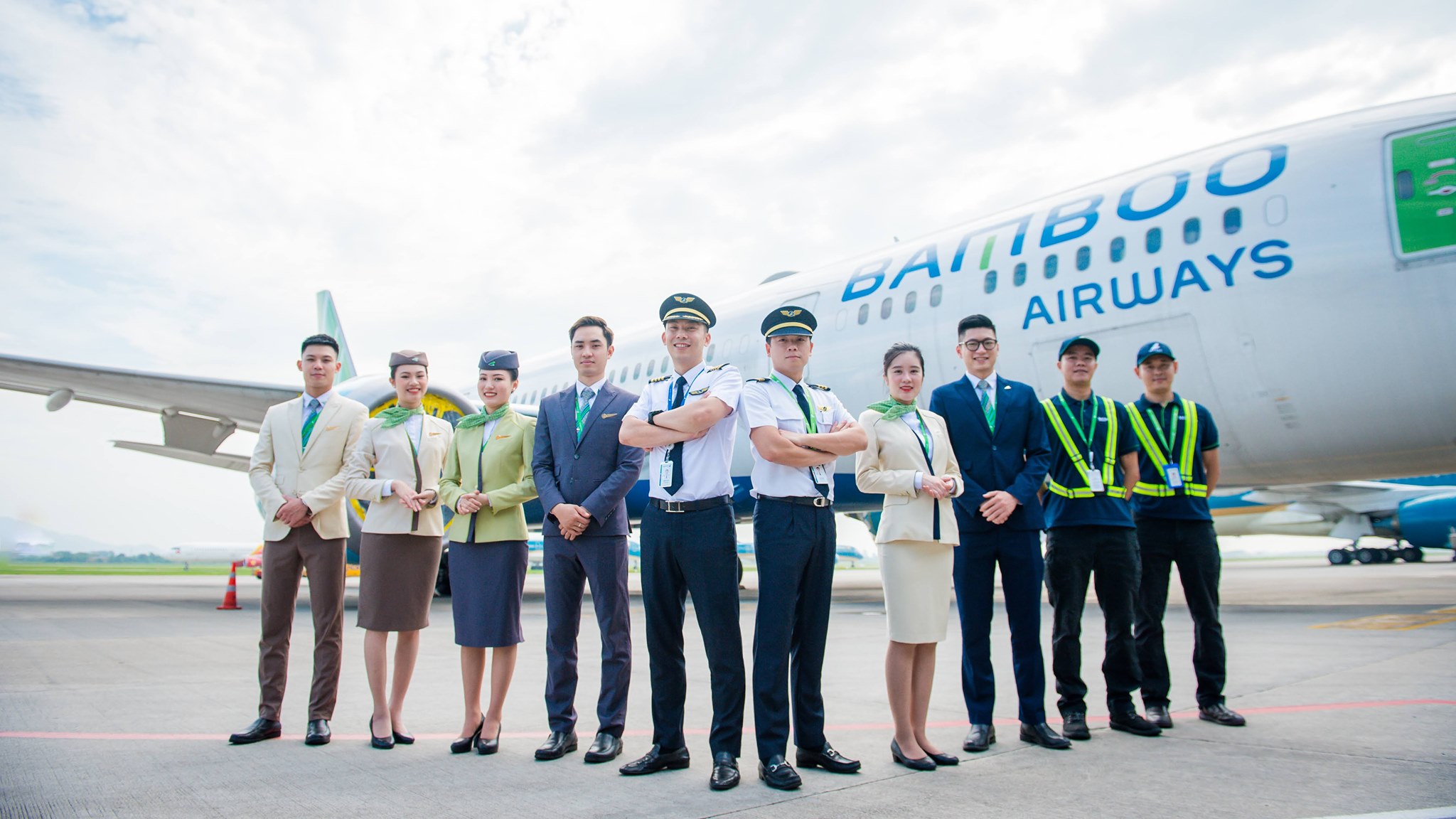
Bamboo Airwaysformerly owned byFLC, is the cabin crew and pilot training center of Bamboo Airway, granted an ATO (Aviation Training Organization Certificate) by the Civil Aviation Authority of Vietnam.
At the end of 2021, the airline opened its first course for Airbus A320 pilot trainees. The Bamboo Airways Aviation Training Institute went into operation in 2022 on a scale of 10 ha, with a total investment of nearly 700 billion VND in Binh Dinh Province, and will train nearly 3,500 trainees each year. To become an official trainee under the standards of the Civil Aviation Authority of Vietnam and Bamboo, a candidate must pass 4 rounds of examinations and checks.
Stanford Aviation International Company
(SAIC)
SAICheadquartered in Tan Binh District, Ho Chi Minh City, affiliated withRoyhle Flight Training(Philippines) has been licensed by the Civil Aviation Authority of Vietnam, with a training capacity of more than 100 pilots/year. Trainees begin with 200 hours of flight training on light aircraft, followed by multi-crew cooperation (MCC), the jet orientation course JOC, and the ATPL, over 14 months.
SAIC has published the cost of the basic training phase as 72,000 USD (~ 1.7 billion VND, including meals, accommodation, and travel). After completing the basic phase, trainees are guided by the center into type rating, at a fee of 25,000 - 31,000 USD (~ 700 million VND) in Singapore, Indonesia, or at Vietjet Academy VJAA.
Vietjet Aviation Academy (VJAA)
(Vietjet Aviation Academy)
VJAAis a well-appointed, modern training facility built to European standards byVietjet Airand the aircraft manufacturerAirbusjointly built and operated since 2018, and approved by the Civil Aviation Authority of Vietnam since 2014. With nearly 4000 training courses, VJAA operates applications of advanced aviation technology and develops a highly qualified team of aviation experts and staff, meeting the development needs of the airline and of the region.
School of Advanced Aviation Technical Workforce Training
VinAviation (Vingroup)
School of Advanced Aviation Technical Workforce Training(part of the groupVingroup) enrolled cohort 1 from 2019, with tuition support of up to 50,000 USD and bank loans of up to 75% of the tuition package. The school partners with the CAE Group (Canada), Aviator College of Aeronautical Science and Technology - ACAST (the United States), and the Pilot Training Academy - AAPA (Australia).
Besides the options in Vietnam, students may choose to study abroad. Countries such as India, the United States, Australia, and New Zealand, ... are ideal destinations for the journey to conquer the skies.
International Aviation Academy of New Zealand
(International Aviation Academy of New Zealand)
International Aviation Academy of New Zealand (IAANZ), located in Christchurch, New Zealand, with a 30-year history in the industry. IAANZ has"turn out"more than 70 young pilots from Vietnam since 2016. The school has also been licensed by the Civil Aviation Authority of Vietnam to recruit and deliver training in Vietnam.
Being a pilot is one of the most fascinating and attractive professions in the world. The freedom to reach new and unfamiliar lands brings a sense of elation and excitement. Yet the dream of conquering“iron bird”is no easy challenge, requiring intense focus and strong determination.Wishing young people every success!