



In an organization, a safety system can be designed through policy, procedures, and control mechanisms. Whether that system truly comes into operation, however, depends heavily on how leaders set direction, make decisions, and lead people when the environment changes.
Especially when technology, the market, and the business environment are changing rapidly, change is no longer an exceptional event; it has become a regular part of management. The challenge for leaders is therefore not only to recognize change, but also to identify proactively the need for change, lead the organization in adapting, and maintain safety throughout that process.
The Safety Leadership & Change Management program focuses on developing safety leadership capability for managers, helping participants clarify the role of leadership in relation to safety behavior, safety culture, and the organization’s process of change.
Program information
- Duration: 1 day
- Format: In-person training
- Audience: Senior leaders and stakeholders
- Instructor: Amel Sedaoui
- Class size: 30 participants
- Delivered for: Vietnam Airlines
When change becomes a capability that leadership must lead
Change is an inevitable trend in an organization's development. When technology, the business environment, and external requirements change rapidly, the organization faces both new opportunities and new challenges.
At the management level, the question is no longer whether there will be change, but:
- Does the Organization Identify Change Early Enough?
- Can leaders create alignment in the approach?
- And is the change process led in a way that still upholds safety requirements?
In many organizations:
- Leadership has not yet taken a direct part in the safety system
- Lack of clear direction on the role of leadership
- Changes have not been led in a consistent way
- Safety culture has not been led from the highest level.
This makes safety programs difficult to sustain. Safety leadership and change management should therefore not be viewed as two separate capabilities. When the organization changes, it is leadership capability that determines how people understand the change, how they respond to it, and how they continue to maintain safe behaviors.

Program objective: Build leadership mindset and role within the safety system
The program aims to help leaders and managers understand more deeply their role in the safety system, while developing the capability to lead in a volatile environment.
Participants are equipped to:
- Gain a Deep Understanding of the Role of Leadership in Safety
- Identify Responsibilities in a Context of Change
- Establish a Direction for Management Team Development
- Strengthen leadership capability in a volatile environment.
From actual implementation at Vietnam Airlines, the program also places the leadership role in relation to safety behavior, safety culture, and the ability to coordinate, persuade, solve problems, make decisions, and manage change.
Program content: Safety Leadership & Change Management
The program content is developed around the core capabilities a safety leader needs when the organization operates in a volatile environment.
Theory and the role of safety leadership
Participants reconsider the role of leadership in relation to the safety system, not only in terms of management responsibility but also in the ability to influence the organization's behavior, direction, and culture.
The Vietnam Airlines article particularly emphasizes the role of leadership in safety behavior and the importance of leadership in promoting a safety culture.
Safety culture and Culture of Care
A notable part of the program is the development of safety leadership skills on the foundation of a Culture of Care. Here, safety leadership is not seen only through the issuing of requirements or the control of compliance. What matters more is the way leaders affect the working environment, people, and the behaviors that take shape in the organization.
Coordination and Persuasion in Safety Activities
A safety system rarely lies within the scope of a single unit. Many decisions require coordination among functions and stakeholders.
The program therefore addresses coordination and persuasion skills in safe operations, helping leaders strengthen their ability to build consensus when the parties have different requirements and points of view.
Problem-solving and decision-making
In a volatile environment, leaders often have to make decisions when information is not yet fully complete and many factors need to be weighed at the same time.
Problem-solving and decision-making therefore become an important part of safety leadership capability. This is also what takes the program beyond the scope of “safety awareness” into practical management capability.
Change Management and Conflict Resolution
Change can take place proactively or reactively. In both cases, correctly identifying the need for change and successfully managing that process are major challenges for managers.
The program helps participants see change in relation to the leadership role, coordination among the parties, and conflicts that may arise in the organization.
Teamwork and the Power of Collective Leadership
Alongside the individual capability of each manager, the program also emphasizes the strength of collective safety leadership. A transformation of safety culture cannot depend on one individual. Only when the leadership team shares a unified understanding, direction, and action does the organization have a foundation for more sustainable change.
From individual roles to the strength of collective safety leadership
A good safety leader can exert influence within their own scope. An organization that wants a fundamental shift in safety culture needs more than that: it needs a leadership team able to view issues together, coordinate, and lead in one unified direction.
Therefore, Safety Leadership is not only the story of “what one leader must do,” but also the story of:What kind of leadership system does an organization need to build so that safety is led consistently from senior level down to actual operations?.This is also why the program focuses on a culture of care, coordination, persuasion, decision-making, change management, and teamwork.
Implementation Methods for the Leadership Level
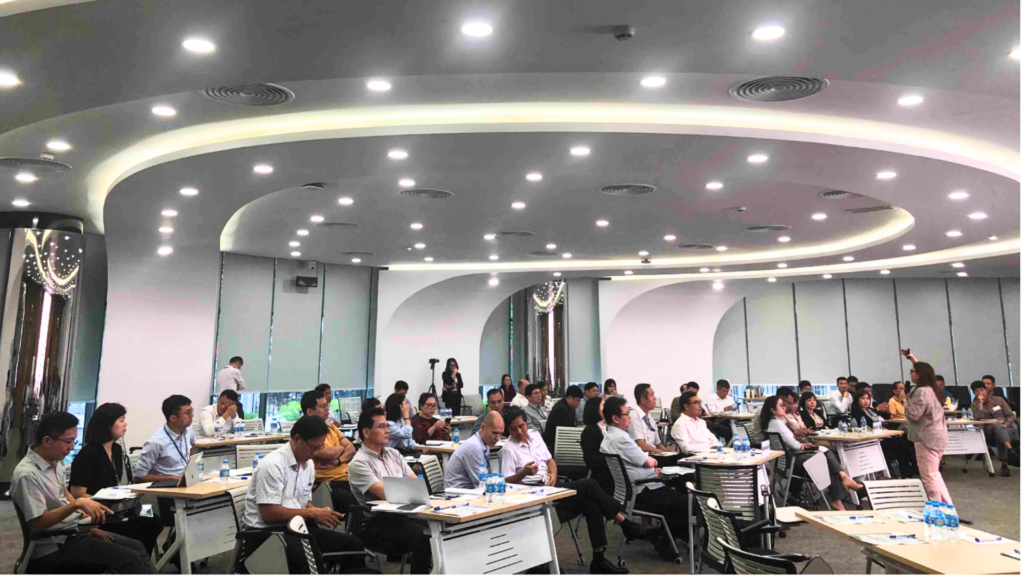
Aimed at leaders and managers, the program is delivered through in-person training combined with discussion of real situations at the management level.
The program setting enables participants to jointly:
- Recognize the role of leadership in the safety system
- Discuss the challenges in the change process
- Analyzing real-world situations
- Discuss different approaches
- Gradually form shared awareness and a unified direction at the management level.
In actual implementation at Vietnam Airlines, the content is also placed in specific problems of operational coordination, balancing safety and service requirements, and the role of leadership in promoting a safety culture.
Value gained after the program
The value of the program lies in helping the leadership team see safety not only as a system to be managed, but as part of how the organization is directed, led, and changed.
After the program, participants will be able to:
- Clearly Understand the Leadership Role in the Safety System
- Shape an Approach Suited to the Organization
- Enhancing team leadership capability
- Link safety with strategy and operations.
In addition, the practical content of the program helps participants strengthen their capability in coordination, persuasion, problem-solving, decision-making, and change management in the context of safety work.
Safety is therefore placed in relation to leadership, people, culture, strategy, and operations, rather than being seen only as a matter for the specialist department.
Which units is the program suitable for?
The program suits organizations that need to strengthen the role of leadership in the safety system and improve the ability to lead when the organization changes.
Suitable participants include:
- Senior leadership team
- Units Implementing Safety Transformation
- Organizations Need to Establish Clear Leadership Roles.
In its implementation at Vietnam Airlines, the program is for leaders, managers responsible for safety, and equivalent roles, with the participation of stakeholders in the aviation ecosystem.
In particular, for organizations entering a period of change, clarifying the leadership role creates a foundation for safety to be led consistently from the highest level.
A safety system is truly effective only when it is led from the leadership level
A safety system may have a full set of policies, procedures, and tools, but the ability to sustain it still depends on the decisions leaders make and the behaviors they influence in the organization.
When the environment changes, this role becomes even more important. Leaders need not only to react to change, but also to be able to recognize the need for change, build consensus, handle conflict, lead the team, and connect safety with the organization’s broader objectives.
Hung Viet helps organizations clarify the role of leadership in the safety system, align understanding at executive level, and connect safety with organizational strategy. Safety leadership is thereby placed in the way the organization is directed and led, rather than being seen only as a separate topic within the safety management system.