


Britannica School is the online database of Encyclopaedia Britannica for schools. The website provides supplementary reference materials for students from primary school through secondary school, as well as teaching lesson plans for teachers.
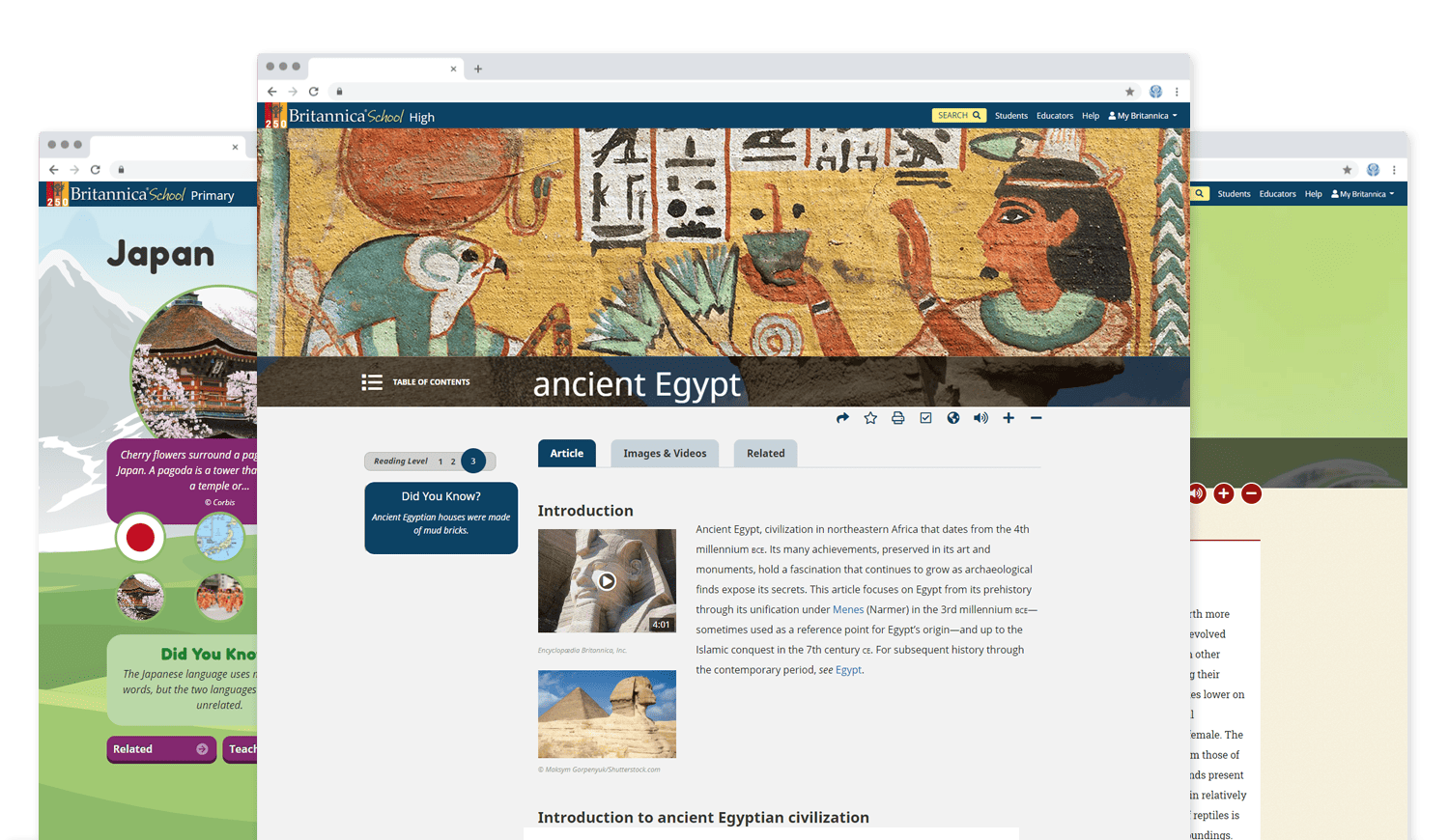
What functions does Britannica School have?
Content on the website is differentiated for elementary, lower-secondary, and upper-secondary reading levels.
When accessing the homepage, students select their school level and class; lower-secondary students can see content in the Explore section such as“Articles”, “Videos and images”and“Biographies of famous people”. Secondary school students can find both quick information and in-depth information on many different topics.
Articles are available at three reading levels, labeled 1, 2, and 3. Students choose their preference and all subsequent articles will appear at that level.
The Lesson Plan and Lesson Creation sections for teachers include search options for Common Core standards, reading level, and STEM connections. There is also information on specific teaching needs such as ESL / ELL and Special Education.
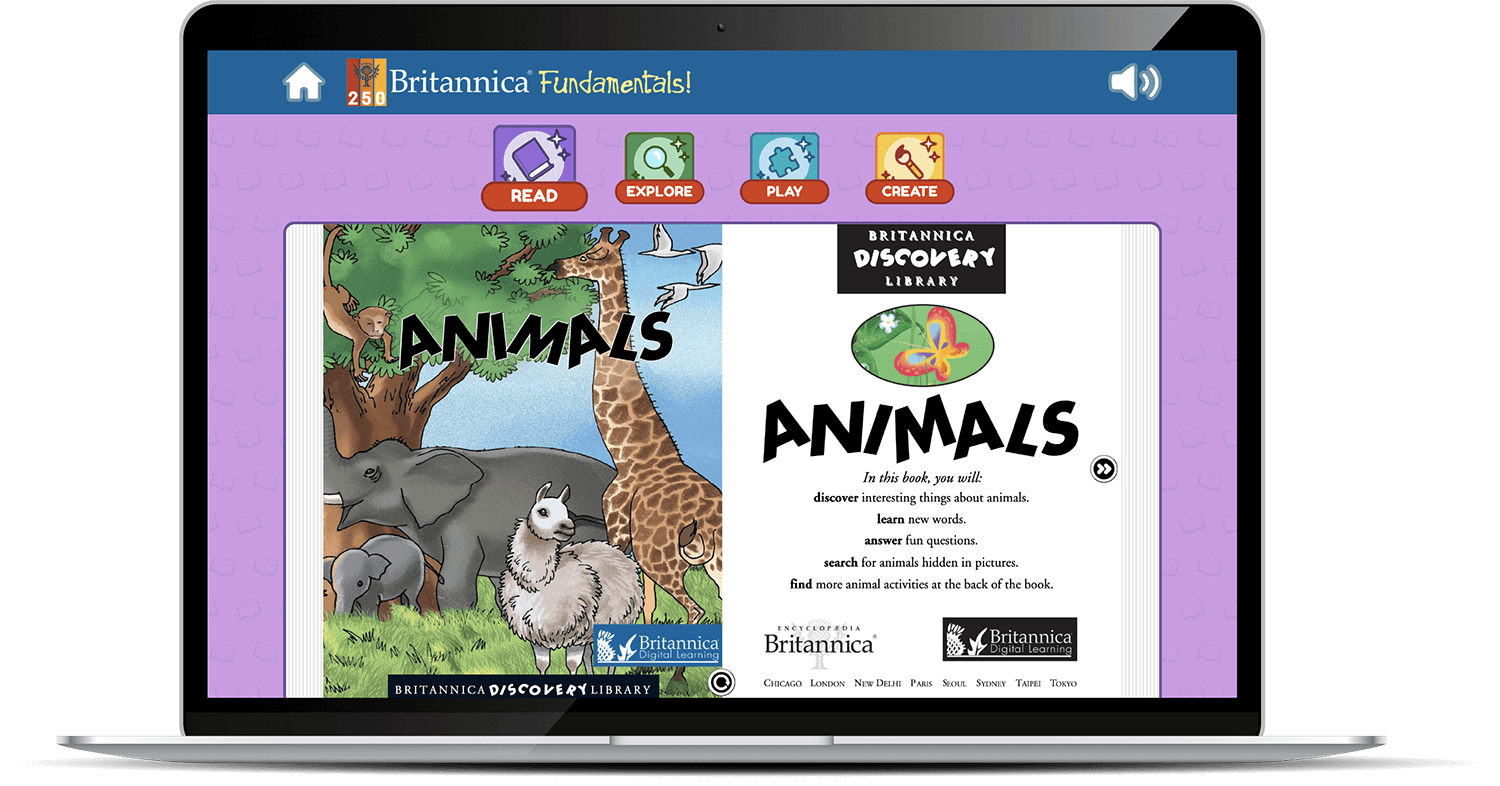
Advantages of Britannica School
Britannica Schoolnot only very good for students, this is also a resource for designing curricula for teachers. Teachers can choose from the library or use the lesson-plan builder to customize activities to teaching objectives and to students’ needs.
For students, multidisciplinary projects are one of the starting points of research. Britannica School can be used for independent work on any topic and at any reading level.
In literature, before reading a novel set in an unfamiliar historical and geographical context, the teacher should ask students to consult the website in order to gain a foundational knowledge of the culture of that era.
Moreover, students can choose to save articles and email them, sharing what they read – these research projects can generate engagement and results on social media.
Even on a broad scale, Wikipedia cannot compete withBritannicabecause Britannica serves entirely the needs of school and university students.
Once students feel comfortable navigating the website's many options, they will explore – and appreciate the importance of consulting reliable sources.

The rich catalog ofBritannica Schoolincludes distinctive articles, multimedia features, translation and audio options, vocabulary support, and adaptive reading levels that make the research experience manageable and accessible for students at every level and with different learning abilities.
The website's guidance on how to carry out research papers, assessments, scientific reports, and presentations is written for students.
These features could also be improved if they provided all the interactive features found in encyclopedia articles.
The Britannica encyclopedia platform and the STEAM Library in Japan
In 2020,Ministry of Economy, Trade and Industry of Japan (METI)collaborated to launch the STEAM Library, a collection of lessons created to nurture students' curiosity and eagerness to learn through innovative educational methods.
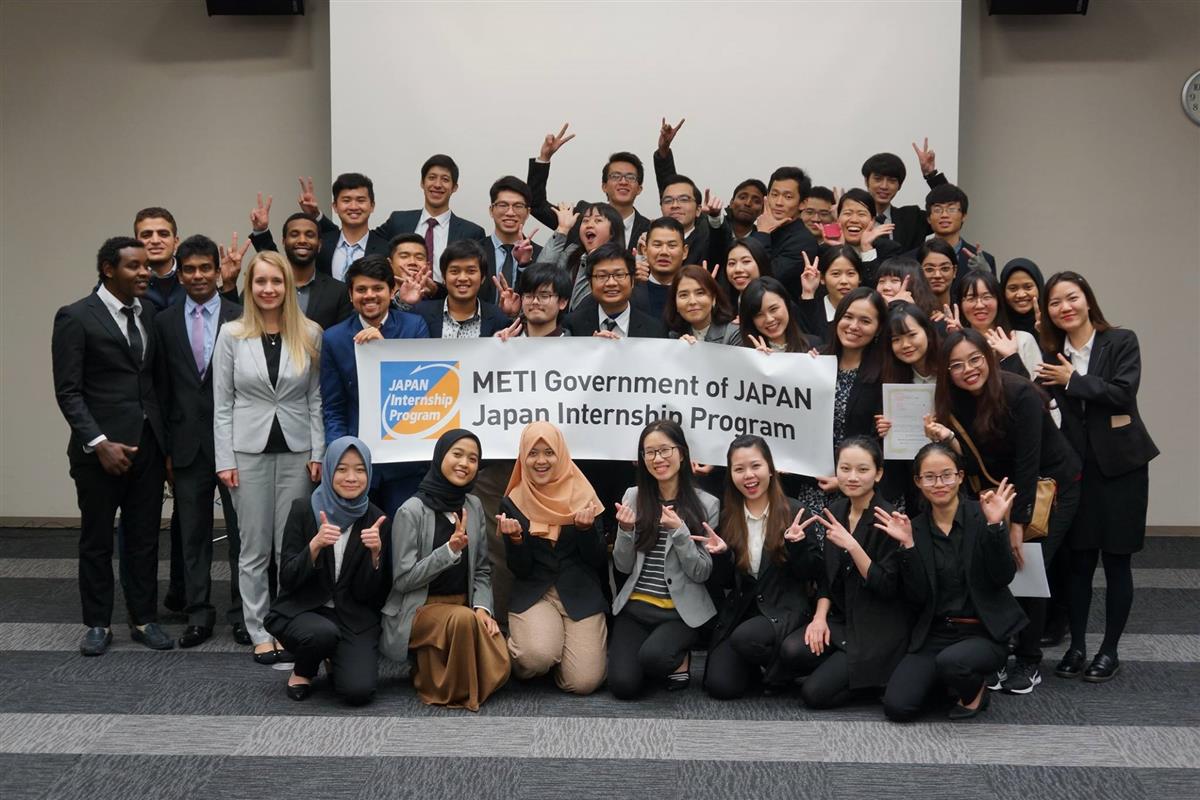
As part of this learning library, Britannica provides a collection of related classroom lessons and homework based on the best teaching and learning practice worldwide.
The guided lessons include opportunities for independent and group learning based on the latest scientific research, videos with their own explanations, guidance for teachers and learners, and interview videos with the professors and researchers who lead this field of research.
Through these real-world examples, Britannica providesSTEAM learning methodnot only integrates the natural sciences with the humanities and social sciences, but also requires students to take charge of their own learning and practice the key skills they will use at university and in the workplace.
All lessons revolve around challenging questions, called“The Big Question”and is designed to stimulate students' interest and their willingness to pursue their questions in depth, while allowing them to consider how technology affects us globally and to understand many perspectives on new fields of research.
The lessons align with the United Nations Sustainable Development Goals, which gives them purpose and relevance for learners today. At the same time, they allow learners to consider how technology affects us globally and to understand many different perspectives on these new fields of research.
Britannica has provided a total of 90 lessons, grouped into 18 topics, in both Japanese and English. Each topic is divided into 5 lessons, beginning with a Big Question and ending with a self-assessment after learning.

Britannica works with researchers and academic experts to ensure that students benefit from the latest research across all fields of scientific study.
Moreover, all topics are accompanied by a detailed Teacher's Guide that supports teachers with specific information on how to facilitate each lesson, while also providing detail on the meaning of teaching STEAM(how to encourage discussion, how to group effectively, how to ensure students take ownership of their learning, how to connect prior knowledge with new knowledge, and more).
Students are also provided with a Guide, or a coursebook explaining the expectations for each lesson and topic and preparing students for this new way of learning.